


adelaidatwopen
adelaidatwopen
Calculate Gross Rent Multiplier and how it is Utilized By Investors

What is the Gross Rent Multiplier (GRM)?
The Gross Rent Multiplier (GRM) is a quick estimation used by realty analysts and investors to examine the value of a rental residential or commercial property. It represents the ratio of the residential or commercial property’s rate (or value) to its annual gross rental income.

The GRM is useful due to the fact that it offers a fast evaluation of the prospective returns on investment and is beneficial as a way to screen for potential investments. However, the Gross Rent Multiplier ought to not be used in isolation and more comprehensive analysis ought to be carried out before choosing investing in a residential or commercial property.
Definition and Significance
The Gross Rent Multiplier is used in industrial property as a “back-of-the-envelope” screening tool and for examining equivalent residential or commercial properties comparable to the price per square foot metric. However, the GRM is not typically applied to residential realty with the exception of large apartment or condo complexes (usually 5 or more units).
Like with numerous evaluation multiples, the Gross Rent Multiplier may be viewed as a rough quote for the payback duration of a residential or commercial property. For example, if the GRM yields a worth of 8x, it can take around 8 years for the investment to be repaid. However, there is further nuance around this analysis discussed later on in this post.

Use Cases in Real Estate
Calculating the GRM makes it possible for prospective financiers and analysts to quickly evaluate the value and feasibility of a prospective residential or commercial property. This simple estimation enables investors and experts to quickly screen residential or commercial properties to determine which ones might be excellent financial investment chances and which ones may be bad.
The Gross Rent Multiplier works to quickly assess the worth of rental residential or commercial properties. By comparing the residential or commercial property’s rate to its annual gross rental income, GRM provides a fast evaluation of possible rois, making it an effective screening tool before committing to more detailed analyses.
The GRM is a reliable tool for comparing multiple residential or commercial properties by stabilizing their values by their income-producing capability. This uncomplicated calculation allows financiers to rapidly compare residential or commercial properties.
However, the GRM has some limitations to consider. For example, it does not account for operating costs, which will affect the success of a residential or commercial property. Additionally, GRM does not think about job rates, which can impact the real rental earnings gotten.
What is the Formula for Calculating the Gross Rent Multiplier?
The Gross Rent Multiplier calculation is relatively uncomplicated: it’s the residential or commercial property worth divided by gross rental earnings. More officially:
Gross Rent Multiplier = Residential Or Commercial Property Price ÷ Annual Gross Rental Income
Let’s more go over the two metrics utilized in this calculation.
Residential or commercial property Price
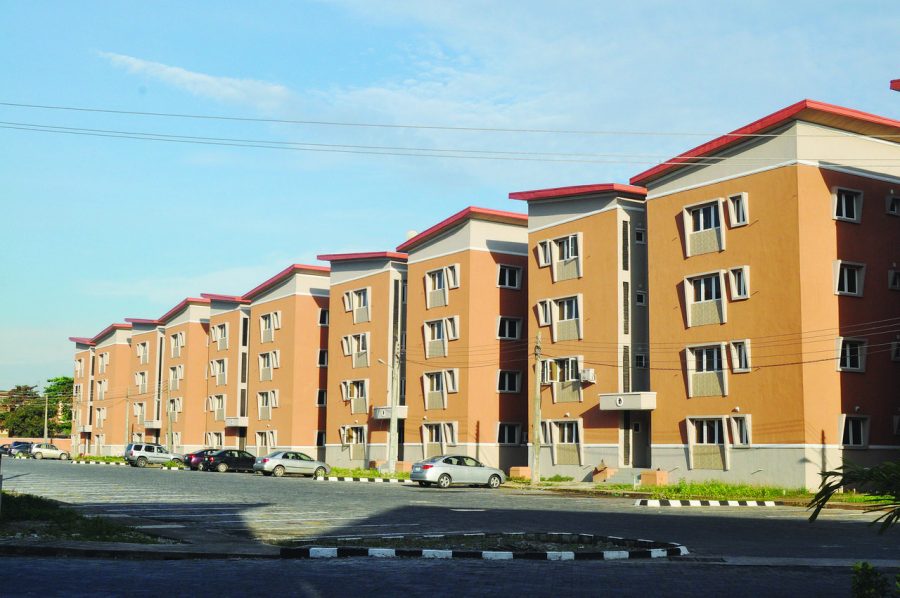
There is no readily offered quoted rate for residential or commercial properties since genuine estate is an illiquid investment. Therefore, genuine estate experts will typically use the prices or asking rate in the numerator.
Alternatively, if the residential or commercial property has recently been assessed at fair market price, then this number can be used. In some circumstances, the replacement cost or cost-to-build might be utilized instead. Regardless, the residential or commercial property rate used in the GRM computation presumes this worth shows the present market price.
Annual Gross Rental Income
Annual gross rental income is the amount of rental earnings the residential or commercial property is anticipated to produce. Depending on the residential or commercial property and the terms, lease or lease payments may be made month-to-month. If this is the case, then the regular monthly rent amounts can be converted to yearly quantities by multiplying by 12.
One bottom line for analysts and investor to be conscious of is calculating the annual gross rental earnings. By meaning, gross amounts are before expenditures or other deductions and may not represent the real income that a real estate investor might gather.
For instance, gross rental earnings does not usually think about potential uncollectible amounts from tenants who end up being not able to pay. Additionally, there may be various incentives used to tenants in order to get them to rent the residential or commercial property. These incentives effectively decrease the rent an occupant pays.
Gross rental income might consist of other income sources if appropriate. For example, a property owner may individually charge for parking on the residential or commercial property. These extra earnings streams may be thought about when assessing the GRM but not all professionals consist of these other profits sources in the GRM computation.
Bottom line: the GRM is roughly similar to the Enterprise Value-to-Sales multiple (EV/Sales). However, neither the Gross Rent Multiplier nor the EV/Sales multiple consider costs or expenses connected to the residential or commercial property or the company (in the EV/Sales’ use case).
Gross Rent Multiplier Examples
To determine the Gross Rent Multiplier, think about a residential or commercial property noted for $1,500,000 that produces $21,000 per month in rent. We first annualize the regular monthly lease by multiplying it by 12, which returns a yearly lease of $252,000 ($21,000 * 12).
The GRM of 6.0 x is determined by taking the residential or commercial property price and dividing it by the annual rent ($1,500,000 ÷ $252,000). The 6.0 x several could then be compared to other, comparable residential or commercial properties under factor to consider.
Interpretation of the GRM
Similar to evaluation multiples like EV/Sales or P/E, a high GRM may imply the residential or commercial property is miscalculated. Likewise, a low GRM may indicate a great financial investment chance.
As with lots of metrics, GRM ought to not be used in isolation. More detailed due diligence must be performed when choosing purchasing a residential or commercial property. For instance, more analysis on maintenance costs and job rates ought to be carried out as these are not specifically consisted of in the GRM estimation.

Download CFI’s Gross Rent Multiplier (GRM) Calculator
Complete the type listed below and download our totally free Gross Rent Multiplier (GRM) Calculator!
Why is the Gross Rent Multiplier Important for Real Estate Investors?
The GRM is best used as a quick screen to decide whether to assign resources to more evaluate a residential or commercial property or residential or commercial properties. It enables real estate financiers to compare residential or commercial property values to the rental income, enabling much better comparability between various residential or commercial properties.
Alternatives to the Gross Rent Multiplier
Gross Earnings Multiplier
Some investor choose to utilize the Gross Income Multiplier (GIM). This calculation is really comparable to GRM: the Residential or commercial property Value divided by the Effective Gross earnings (rather of the Gross Rental Income).
The main distinction in between the Effective Gross Earnings and the Gross Rental Income is that the effective income determines the lease after subtracting expected credit or collection losses. Additionally, the income used in the GRM may sometimes exclude additional charges like parking costs, while the Effective Gross Income includes all sources of potential income.
Cap Rate
The capitalization rate (or cap rate) is computed by dividing the net operating earnings (NOI) by the residential or commercial property value (list prices or market value). This metric is commonly used by investor wanting to comprehend the potential roi of a residential or commercial property. A higher cap rate typically shows a greater return but might likewise show higher risk or an undervalued residential or commercial property.
The main differences in between the cap rate and the GRM are:
1) The cap rate is revealed as a percentage, while the GRM is a multiple. Therefore, a higher cap rate is normally considered better (neglecting other factors), while a higher GRM is normally indicative of a misestimated residential or commercial property (once again neglecting other aspects).
2) The cap rate uses net operating income instead of gross rental earnings. Net operating income deducts all operating expenses from the overall revenue created by the residential or commercial property, while gross earnings doesn’t subtract any costs. Because of this, NOI offers better insight into the potential success of a residential or commercial property. The difference in metrics is roughly comparable to the distinction between standard monetary metrics like EBITDA versus Sales. Since NOI consider residential or commercial property expenses, it’s more suitable to use NOI when identifying the payback duration.
Advantages and Limitations of the Gross Rent Multiplier
Calculating and analyzing the Gross Rent Multiplier is vital for anybody involved in business property. Proper analysis of this metric helps make educated decisions and examine financial investment potential.
Like any appraisal metric, it is necessary to be knowledgeable about the benefits and downside of the Gross Rent Multiplier.
Simplicity: the GRM is reasonably simple and offers an user-friendly metric that can be easily communicated and interpreted.
Comparability: Since the GRM is a ratio, it scales the residential or commercial property worth by its expected earnings, enabling users to compare different residential or commercial properties. By comparing the GRMs of numerous residential or commercial properties, investors can recognize which residential or commercial properties might provide much better value for cash.
Limitations

Excludes Operating Expenses: A major limitation of the GRM is that it does not take into account the operating costs of a residential or commercial property. Maintenance expenses, insurance, and taxes can greatly impact the actual success of a residential or commercial property.
Does Rule Out Vacancies: Another restriction is that GRM does rule out job rates. A residential or commercial property might show a favorable GRM, but changes in vacancy rates can significantly decrease the real earnings from renters.
The Gross Rent Multiplier is an important tool for any real estate investor. It works for fast contrasts and preliminary assessments of potential property financial investments. While it ought to not be used in seclusion, when combined with more extensive analysis, the GRM can considerably enhance decision-making and resource allowance in real estate investing.
 Total Users : 26635